Plan ahead and have a consistent message: recommendations for climate crisis communication
A new report with guidance on how to improve science communication in the face of urgent and unexpected climate-related events has been published. The report was developed by partners involved with the EU-funded COALESCE project and is specifically designed for science communication professionals, journalists, and practitioners who work on climate-related issues.
“The report is particularly relevant for those responsible for conveying information, assessing risk, and advising on communication strategies during crises. While it includes policy-makers, it focuses specifically on those tasked with public-facing communication or institutional decision-making regarding emergency messaging,” says Juan Romero Luis, Science Communication Researcher at Science for Change, a COALESCE partner and Hub.
The report’s guidance is the result of the participatory session “Climate Communication in Crisis Workshop: Co-creating Early Warning Strategies”, held by COALESCE in Belgrade as part of the Climateurope2 festival.
This session served as the primary data collection phase, where we gathered the insights and evidence necessary to generate our results.
The workshop, which involved eight participants, “served as the primary data collection phase, where we gathered the insights and evidence necessary to generate our results,” Juan says. The report, which will be made available through the European Competence Centre for Science Communication, highlights three topics: key considerations for efficient science communication, barriers and solutions, and policy recommendations for urgent responses to climate crises. It follows previous work on how science communication can contribute to navigating complex, urgent societal issues being undertaken within COALESCE. The Crisis Navigator roadmap is one such example, providing support for the rapid mobilisation of science communication when a crisis emerges.
“The defining factor here is the combination of urgency and the unexpected. When a climate event strikes without warning, everyone involved – from researchers to the public – is forced to navigate a landscape of high inherent uncertainty. In such rapid-onset scenarios, there is no luxury of waiting for perfect data; the situation demands immediate engagement,” says the first author of the report.
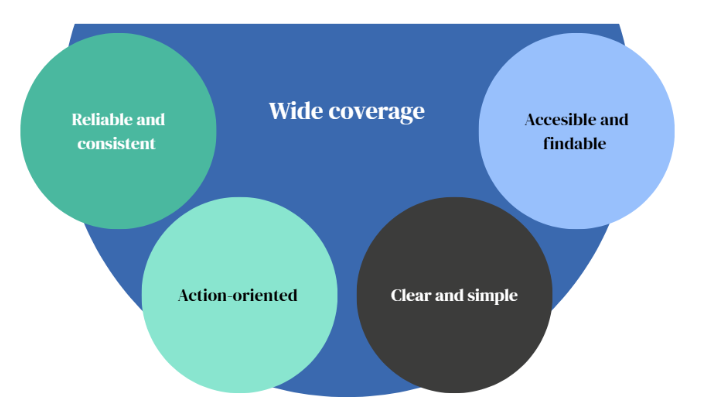
For messages to achieve wide coverage, they need to be easily understood by everyone and include credible information. In times of crisis, particularly during urgent and unexpected climate-related events, these principles are even more relevant.
Credible information depends not only on the message itself, which should be consistent and avoid confusion, but also on the source of the information. Both need to be trustworthy, verifiable and unbiased – decoupled from any political agenda. The information must be easy to find, available to everyone, easily understood and relevant. Emotions play an important role in communication, especially during a crisis, but they have to be based on factual information.
During a crisis, when people feel at risk and want fast solutions, emotions will play an even greater role than in daily communication. Challenges and barriers will emerge, such as disinformation, denialism, overexposure to alerts, or contradictory information. Solutions to overcome these difficulties must be planned ahead, including preparing guidelines and best practices, training communicators, building climate, science and media literacy, and fostering trust in institutions and messengers.
“The report identifies five main barrier areas. All of them are relevant, but if I have to choose, I’d say we should prioritise: operational preparedness – defining guidelines and practising simulations to handle uncertainty; and literacy and narratives – investing in long-term climate and media literacy and using storytelling to convey complex information intuitively,” Juan says.
For communication to be effective during a climate crisis, a clear pathway must be defined in advance. Know your audience in detail, particularly the most vulnerable groups, establish a legal and administrative framework that defines the roles and responsibilities regarding communication, and co-create with different stakeholders a unified communication strategy. Then, test your protocols and refine them so you are ready when an urgent and unexpected climate-related event occurs.
The actionable guidance provided by this report is relevant for the United Nations initiative “Early Warnings for All”, which aims to “ensure that everyone on Earth is protected from hazardous weather, water, or climate events through life-saving early warning systems by the end of 2027”.